Beyond Paper Compliance
October 12, 2026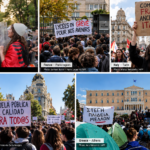
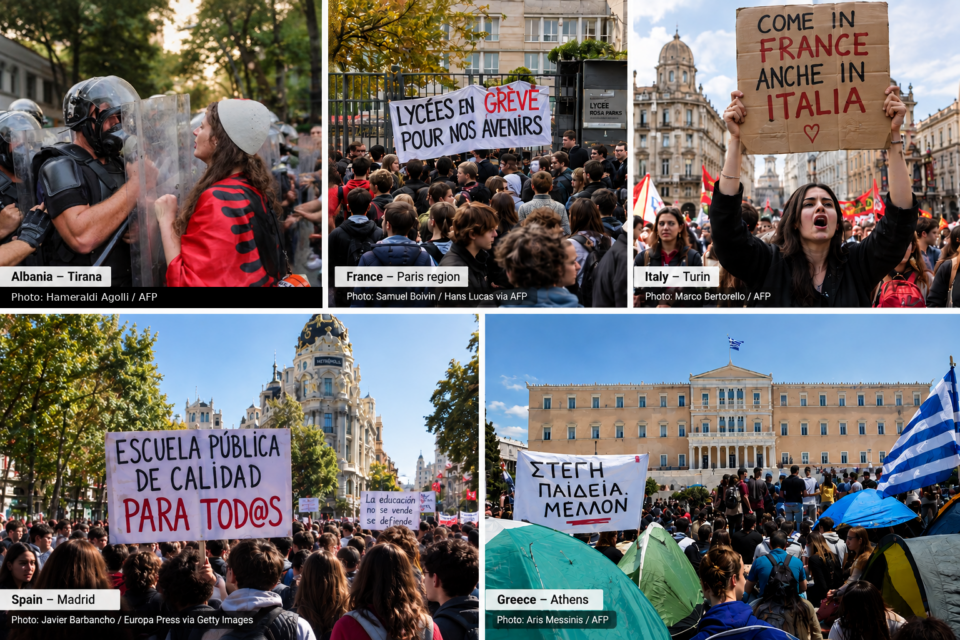
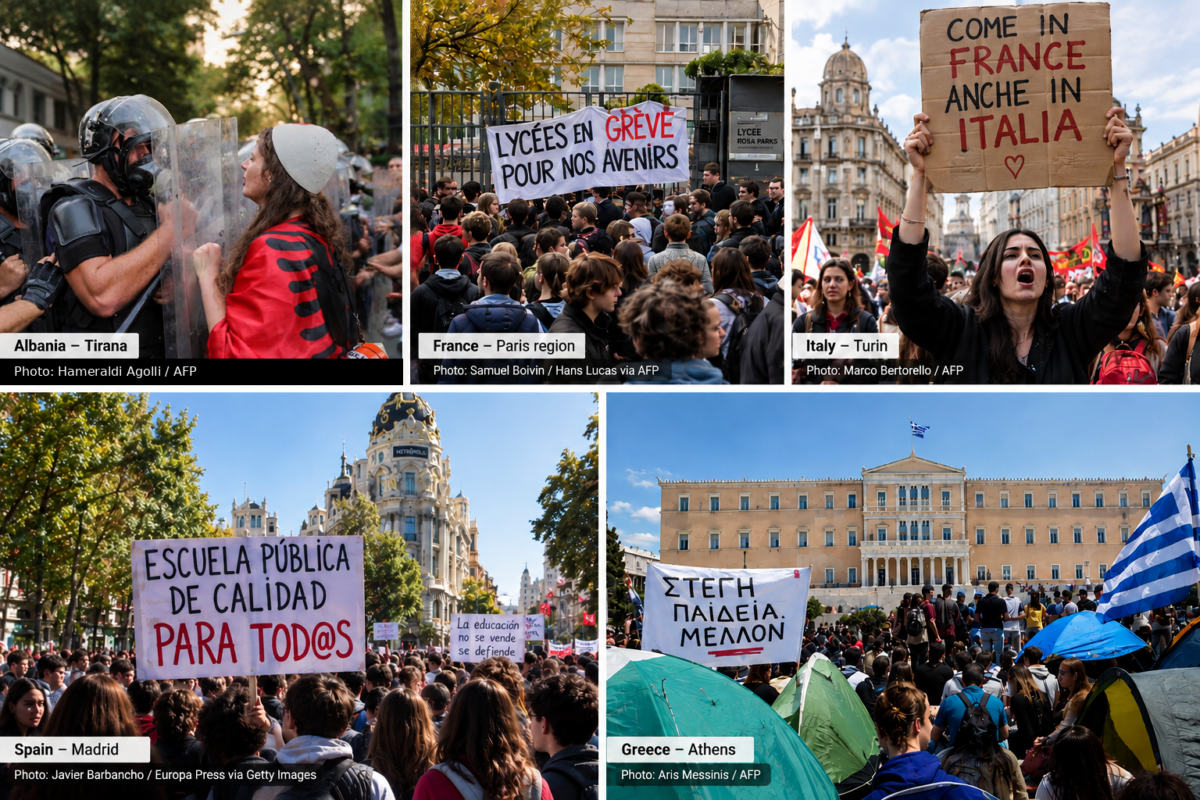
A generation across Europe on the streets
October 19, 2026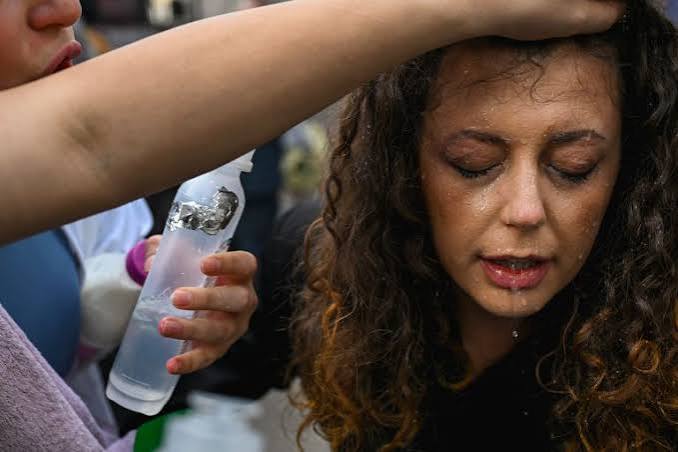
Physiological water after police tear gas ©AFP
A generation on the streets
The current wave of student demonstrations did not emerge in isolation. It grows out of the Flamingo Revolution, a civic movement that began as a local protest over land and the environment. In early February 2026, residents of Baks-Rrjoll protested a planned resort and unresolved land-ownership disputes, and a larger wave followed on 16 May 2026 at Zvërnec. The turning point came on 30 May 2026, when violence against protesters near the Zvërnec project site triggered demonstrations in Tirana the following day. From 31 May 2026 the capital’s protests became a daily event. More than four months on the streets, citizens and young people at its forefront have been demanding transparency and accountability. Thousands of young Albanians under their student-led movement have been constantly demanding the Prime Minister’s resignation. The demonstrations, over corruption, quality of education and a lack of jobs, have begun spreading across the country.
Two sides of the same coin
Balanced and accurate reporting must acknowledge both. A group of masked young people threw stones at riot police, and officers were injured. Violence against police officers is unlawful and cannot be justified, and public order is a legitimate concern for any state. In the classical Weberian definition, the state is a human community that successfully claims the monopoly of the legitimate use of physical force within a given territory. That monopoly is what makes the state responsible for keeping order. But the key word is “legitimate”, and the force is legitimate only when it is lawful, necessary and proportionate. The standard that condemns stones thrown at officers applies equally to batons raised against protesters.
The conduct of a minority cannot negate the rights of the peaceful majority. The right to peaceful assembly is firmly anchored in Albania’s legal order. It is guaranteed by Article 47 of the Constitution, subject only to restrictions that Article 17 requires to be provided by law, in the public interest and proportionate to their aim. Article 11 of the European Convention on Human Rights, which Albania ratified in 1996, and Article 21 of the International Covenant on Civil and Political Rights also guarantee it. The case law of the European Court of Human Rights and the UN Human Rights Committee, in particular General Comment No. 37 (2020), is consistent on a central point. Isolated acts of violence by some participants do not strip an assembly of its peaceful character, and an individual who does not himself commit reprehensible acts remains under the protection of the right to assemble (Ezelin v. France, 1991).
The same framework sets limits on how the state may respond. Under the UN Code of Conduct for Law Enforcement Officials and the UN Basic Principles on the Use of Force and Firearms, force may be used only when strictly necessary and to the minimum extent required. The OSCE/ODIHR and Venice Commission Guidelines on Freedom of Peaceful Assembly add that policing should facilitate assemblies, and that responses should be targeted at violent individuals rather than at the gathering as a whole. The state’s duty is therefore twofold: to hold those who commit violence individually accountable, and to protect everyone else’s right to take part in the assembly.
Civil disobedience in practice
Are young people in Tirana practising civil disobedience? In its classical sense, civil disobedience is a conscientious, public and non-violent act in which a person accepts the legal consequences of defiance. Many of these young people are articulating exactly that stance.
Student Samanda Toçka put it in a sentence that travelled across the country. After a speech that moved many Albanians, she wrote on social media that violence must stop and that her voice, like every student’s, must be heard: “Stop the violence, arrest me, but don’t violate me.” The message is unambiguous. She does not deny the state’s authority to hold her accountable. She refuses to accept that accountability can ever include violation of the body.
The case of Klevis Metaj
The case of Klevis Metaj shows what is at stake. Metaj is a 22-year-old from Gjirokastër and graduated from the Faculty of Law at the University of Tirana.
According to video footage circulated after the 13 October protest, Metaj was walking along the pavement when an officer struck him, after which he became involved in a physical confrontation with six officers. Later images show him handcuffed near the ministry’s railings. He was taken to hospital, and a Tirana court has since ordered house arrest for him.
The facts of this case must be established by independent and transparent investigation. Yet the fact that he has become a national symbol tells us how deeply many young people fear that dissent is met with force.
From commitments to practice
There are early signs that institutions are being tested. Seven police officers have been suspended pending investigations into allegations of excessive force, and the Prime Minister has said his government respects the students and will protect their right to protest. Such statements carry weight only if they translate into practice, and the test begins on the street. Policing of assemblies must be guided by necessity and proportionality, with water cannon, tear gas and other less-lethal means reserved as a last resort, never used as a first response to a crowd in which many people are demonstrating peacefully.
Accountability must not end with the street. Every complaint of excessive force, ill-treatment or degrading treatment, including in custody, should be examined promptly and impartially, and its outcome made public. Those who have been detained, many of them young, must have access to a lawyer, to their families and to medical care, and the rights of any minors must be strictly observed. Charges and restrictive measures should rest on individual evidence rather than be applied collectively to everyone who took part, because prosecuting participation itself turns a right into an offence. Finally, the demands behind the protests, on education, jobs and corruption, deserve a substantive answer from those in power, not only a security response.
Protecting dissent, protecting democracy
A young person who says “arrest me, but do not violate me” is asking the state to be better than the worst moment on the street. That is not a threat to democracy. It is a test of it.
EEO – Center for Equity, Environment and Open Innovation stands by the right of every rights holder to peaceful protest as demonstrations continue in Tirana, Albania, and calls on duty bearers to respect, protect, and uphold this right.
Democracy thrives when voices are heard, rights are respected, and accountability is upheld.
About EEO Center
EEO – Center for Equity, Environment and Open Innovation is a Tirana-based organisation working on human rights, environment and open innovation. Our vision: EmPower, Engage, Omnia.